
Western Bluebird
Meet Oregon’s
Native Songbird
The Western Bluebird (Sialia Mexicana) is a member of the Thrush family. It is about 7 inches long, with a short tail. The male has a cobalt-blue head, wings, and tail, and both male and female have a chestnut/rust colored breast. The female is duller and grayer with blue wings and tail. Juveniles have heavily spotted breasts until their first molt in the fall. Their life span is typically 5-6 years but can be up to 6-10. There are two other species of bluebirds: Eastern and Mountain.
The Western Bluebird
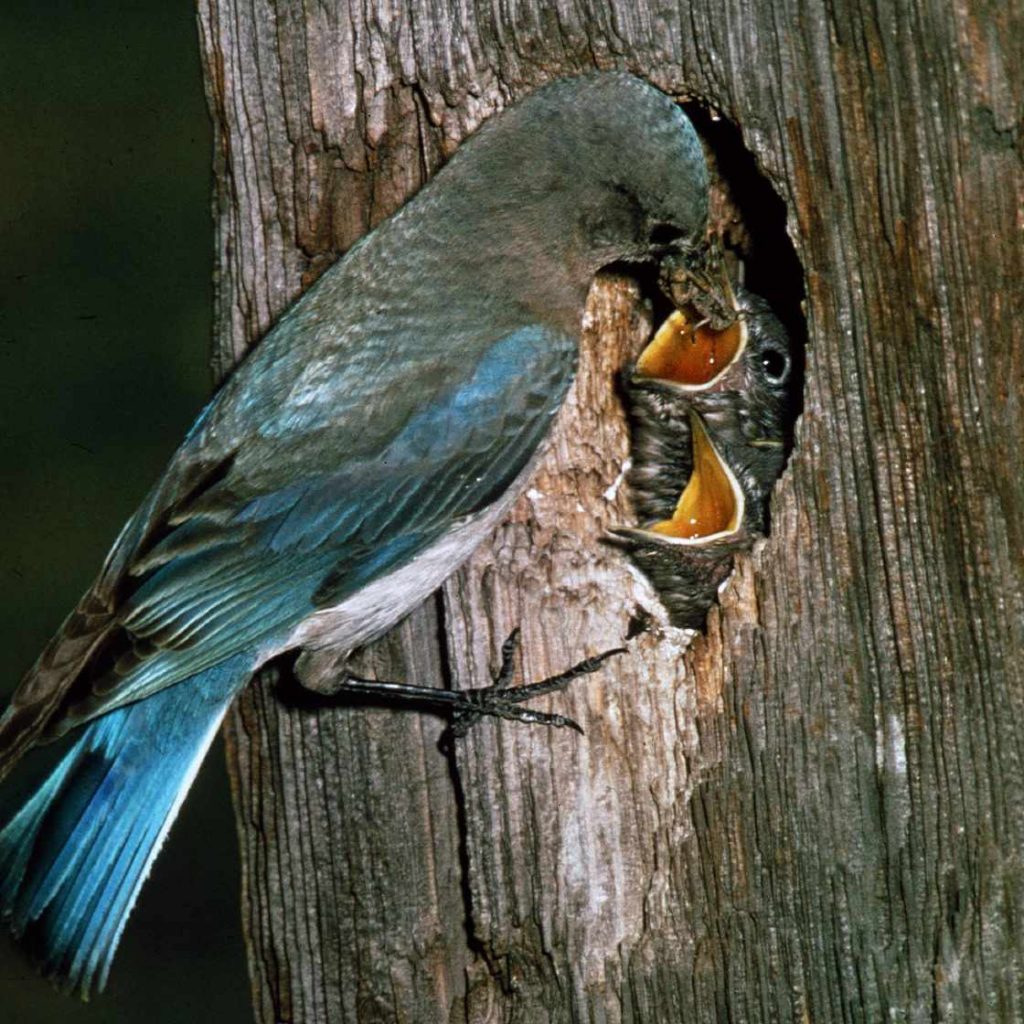
History in the Northern Willamette Valley
Western Bluebirds breed throughout most of the Western US, Mexico, and SW Canada. Click here for a map of their range. A native species in Oregon, Western Bluebirds were once common in the Willamette Valley, nesting in natural cavities like wooden fence posts and dead trees. As small farms gave way to large-scale farming and increased development, habitat and food sources declined. Increased use of insecticides and competition from invasive species like European Starlings and House Sparrows further reduced the population. By the 1940s, bluebirds had largely disappeared from the valley floor, surviving only in higher elevations. They are an Oregon Conservation Strategy Species with “sensitive species” status.

Environmental Challenges
Cold spells during Oregon’s typically rainy springs can take a toll on bluebird nestlings. Newly hatched young are unable to generate their own body heat for their first week, depending entirely on the female for warmth to survive. Food resources can be scarce with fewer insects. Both adults and young are threatened by predation from snakes, raccoons, and raptors.
Call
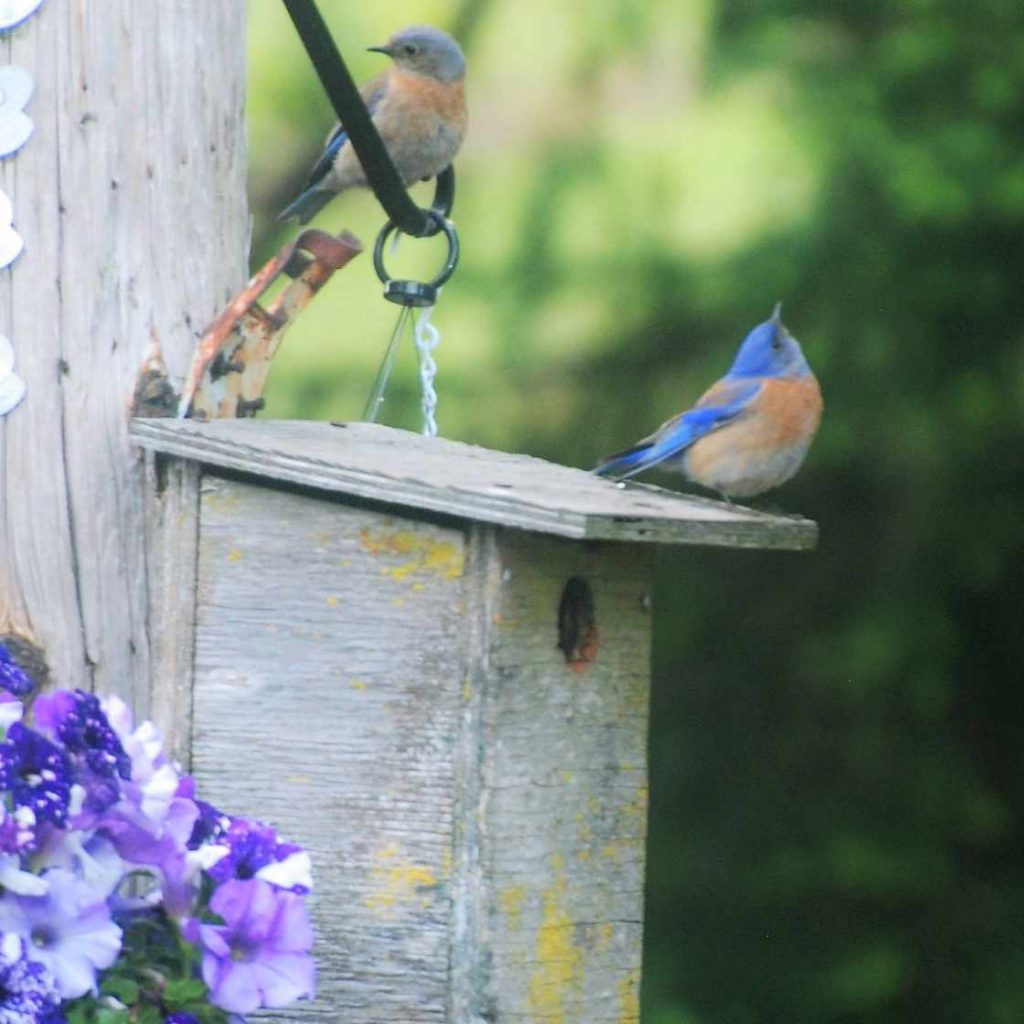
The Western Bluebird’s call is a soft, musical note that sounds like “tew,” heard either singly or in a short series. These calls help bluebirds stay in contact, especially during the breeding season. Males may also sing more elaborate songs to mark territory or attract a mate. Listen to their songs at allaboutbirds.org.
Habitat
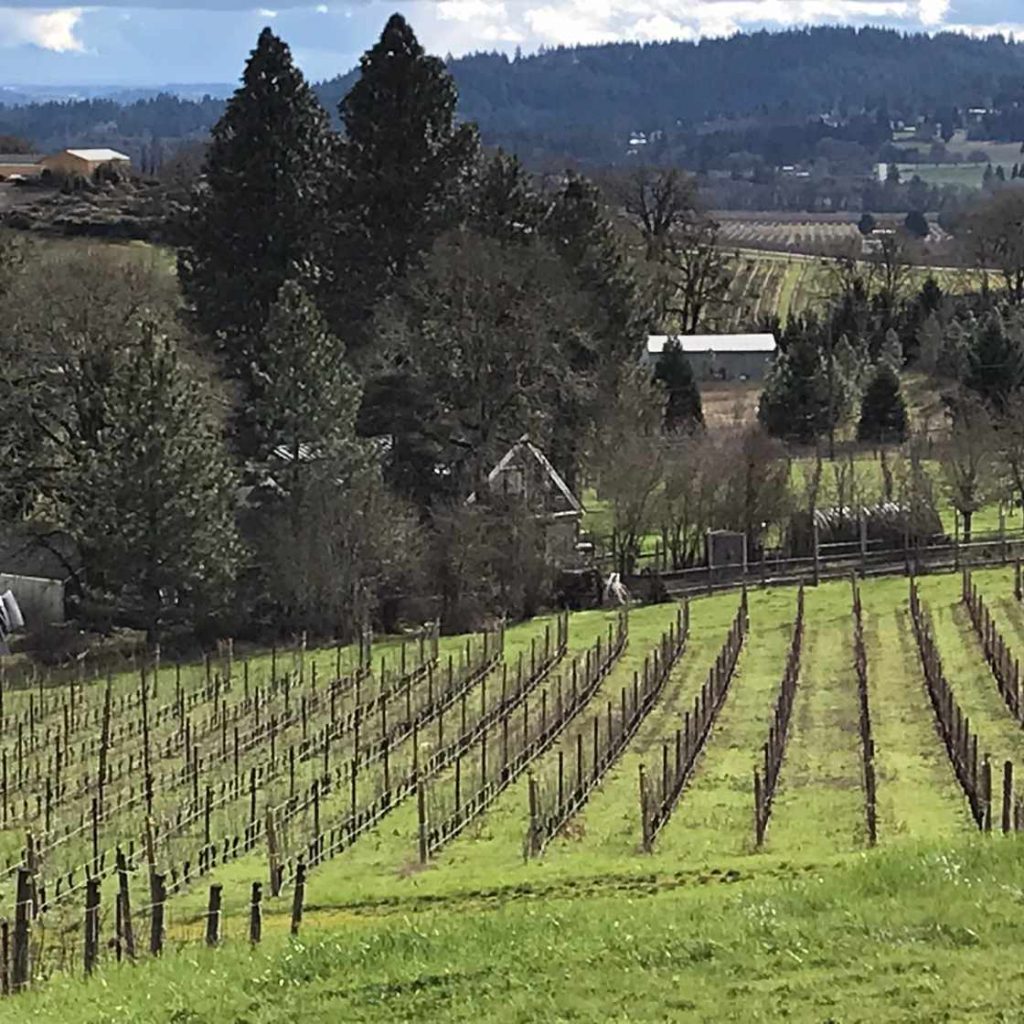
Bluebirds’ preferred habitat is open areas with short vegetation and scattered trees. They use trees, fenceposts, and overhead wires to perch for hunting insects on the ground and defending their nest sites. In the Willamette Valley they nest in vineyards, orchards, cemeteries, and along the treed edges of pastures with short grasses. They don’t nest in urban areas and rarely in suburban developments.
Diet
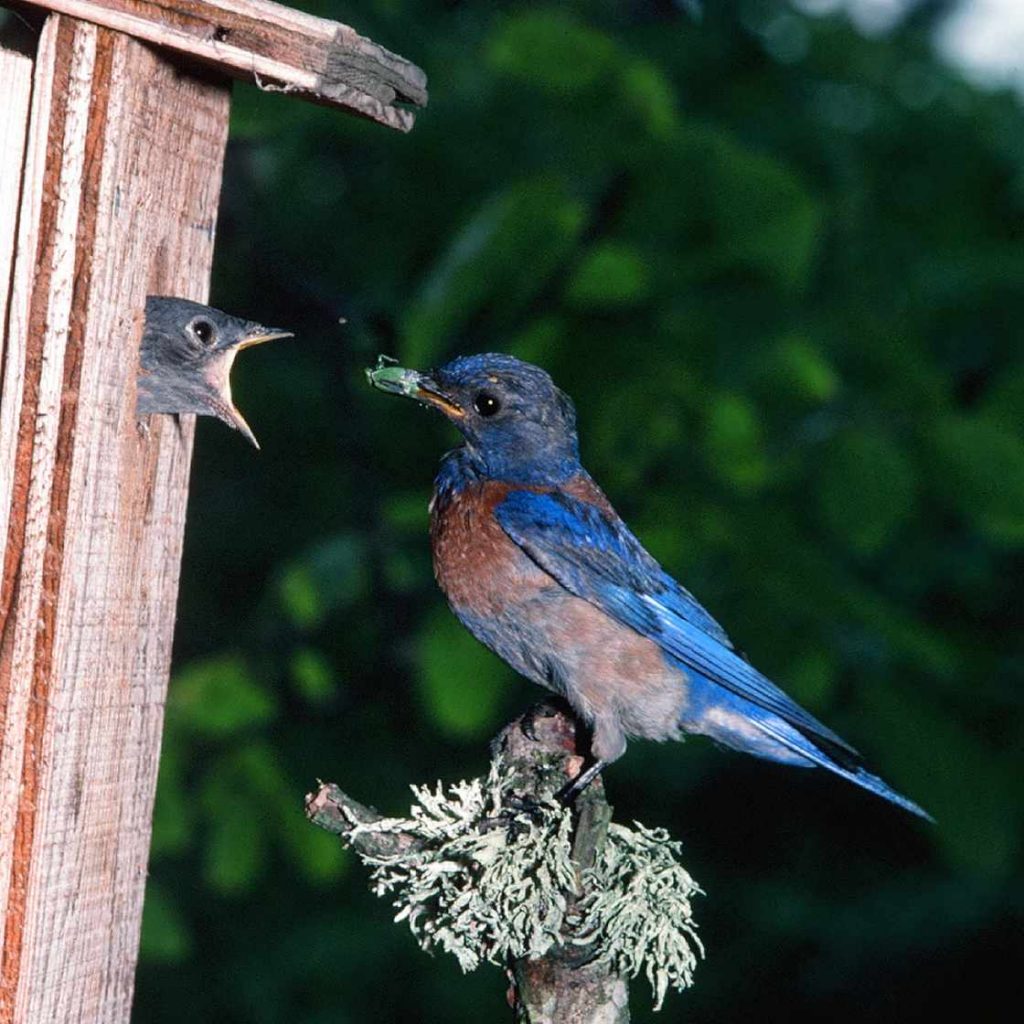
Bluebirds primarily eat insects, such as spiders, crickets, grubs, beetles, and grasshoppers and, to a lesser extent, berries if readily available. In winter they feed more on mistletoe and juniper berries. They typically hunt by perching to survey for insects, then swooping down to capture their prey on the ground. An adult with very young nestlings will pound the insect on a hard surface to pulverize it for the young; as the nestlings grow larger, they are able to consume insects whole.
Nesting Sites
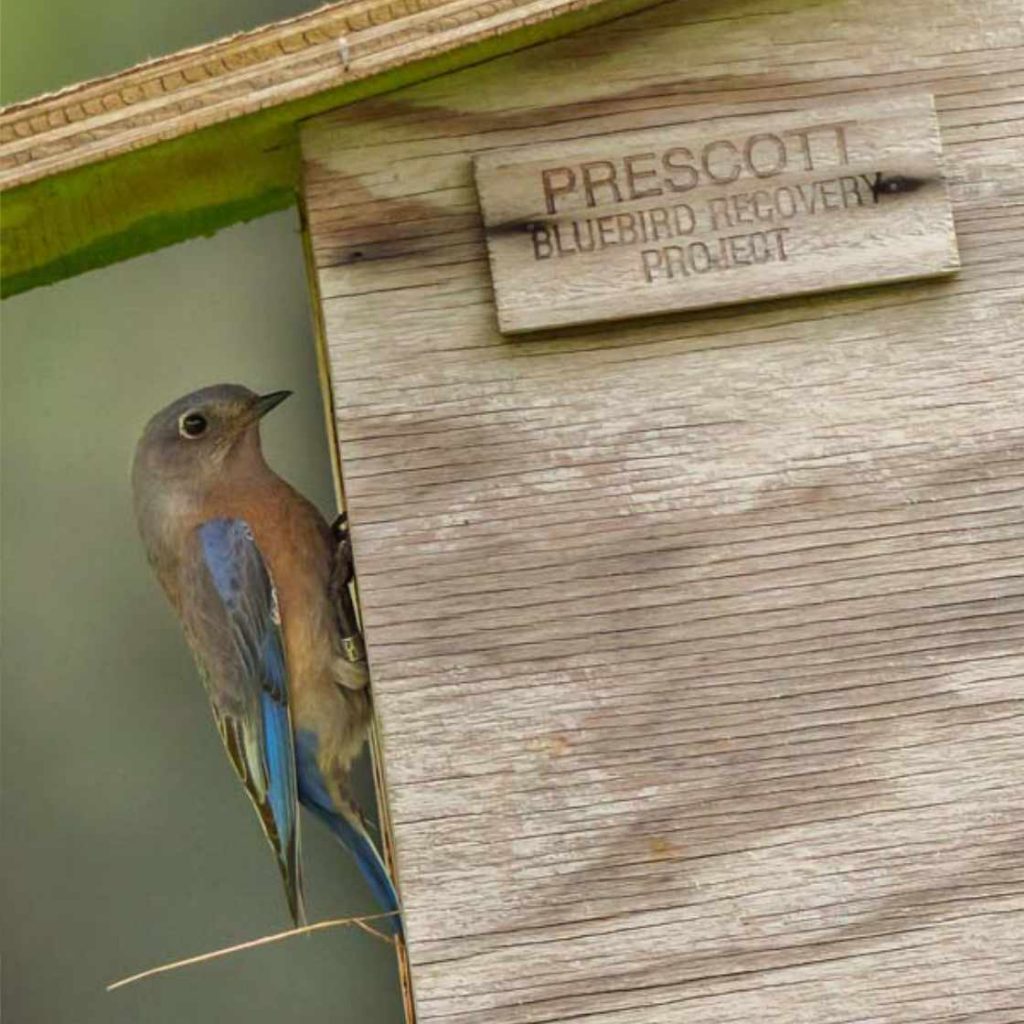
Bluebirds are secondary cavity nesters, which means they don’t excavate a cavity but rely on natural cavities or holes created by other species such as woodpeckers. They will readily nest in man-made nest boxes. Our nest boxes are designed and sited with the specific needs of our local bluebirds in mind. Like most birds, bluebirds are highly territorial during the breeding season, and there can be intense competition for nesting sites among them as well as other native birds, such as swallows. Nest boxes are placed at a minimum 100 feet apart, preferably not within a direct line of sight. While the male initially establishes a territory and may select multiple potential nesting sites, it is the female who chooses the site. During winter months, nest boxes often serve as roosting sites for birds sheltering from the weather.
Nesting Behavior
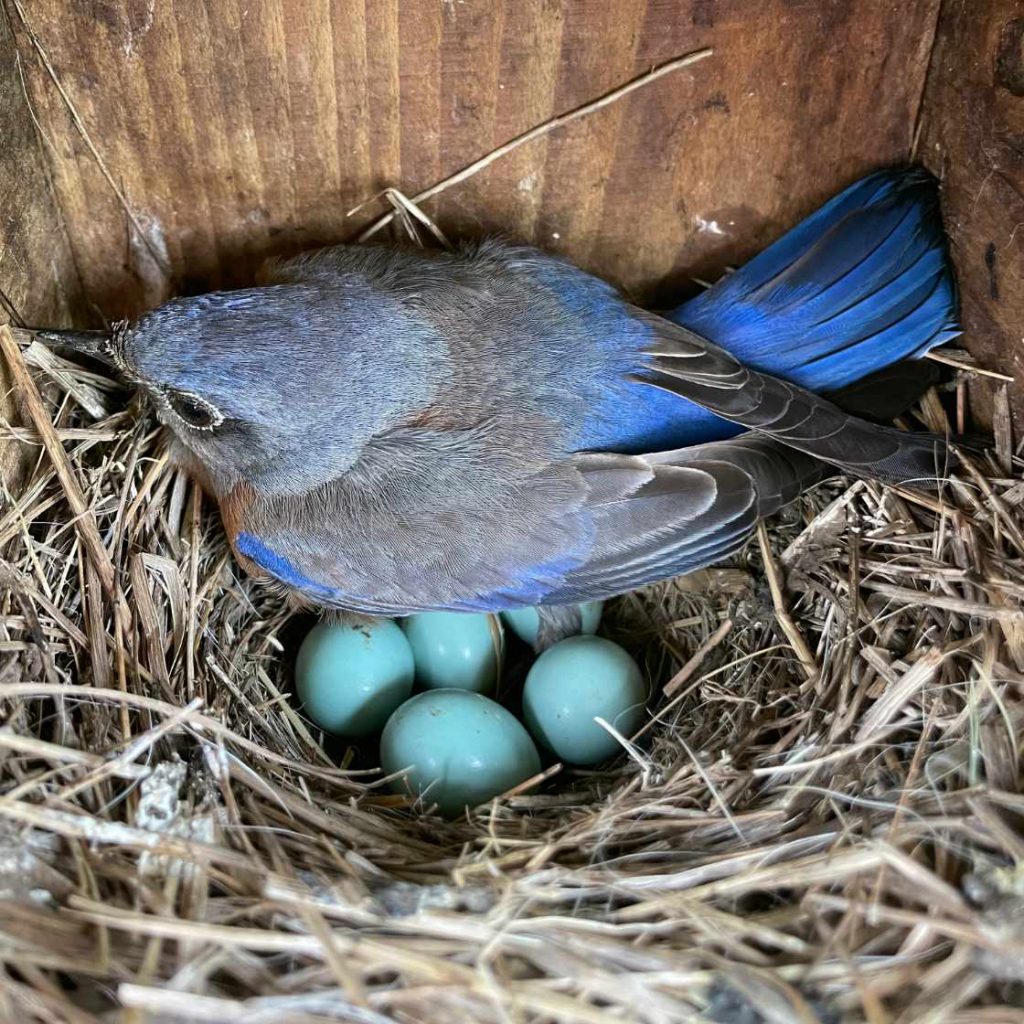
The bluebirds begin pairing up in March and early April. After selecting a nest site, the female builds a neat, cup-shaped nest of dry grass. She lays a clutch of 4-6 blue eggs, one per day; incubation will begin once the clutch is complete. She alone will incubate the eggs for about 14 days, depending on the male to feed her and leaving the eggs only briefly. The hatchlings are altricial, meaning they are blind, naked, and helpless. Both parents feed the hatchlings, but only the female broods them. If the female dies, the male cannot keep the young warm and fed and will likely abandon the nest to seek a new mate and begin again. The chicks develop rapidly, fledging at approximately 21 days after hatch. After fledging, the young must learn to hunt and survive on their own. This work largely falls to the male as the female often begins a second clutch. Sometimes juveniles from the first clutch will help the parents feed the chicks in the second clutch.
Migration
Western Bluebird Resources
Frequently Asked Questions
What is the difference between a blue jay and a bluebird?
Jays in our area are somewhat stocky and 10 to 12 inches long. The beak is large and heavy. In contrast, a Western Bluebird is 7 inches long with a short, pointed beak.
There are two common Jay species in our area: The California Scrub Jay is blue and gray with a pale underside. The Steller’s Jay is charcoal black and gray with a prominent black crest. Both are noisy, gregarious birds that will monopolize a bird feeder.
Bluebirds primarily eat insects, and do not frequent seed feeders. The male bluebird has rich cobalt blue feathers on the head, wings, back and tail, and the female is greyer with less brilliant blue. The male and female have distinct rusty red breasts and usually have some rust color across the shoulders.
How long does it take for the eggs to hatch?
The female lays one egg per day, and when the clutch is complete, she will incubate the eggs for about 14 days.
Are the eggs always blue?
Infrequently, a female will lay white or pinkish colored eggs. This only occurs in 4-5% of clutches. A female who lays white eggs will continue producing only white eggs. Why? We don’t know for sure; the female has a gland that colors the eggs. Theories range from infection to genetics. Despite their color, the eggs are fertile and produce normal chicks. Read our Fall 2023 newsletter for a story about white eggs.
How long are the chicks in the nest?
From the time they hatch to the time they leave the nest, called fledging, is approximately 21 days.
Will bluebirds return the next year to the same nesting box?
Generally, a pair of bluebirds that nests successfully will return to the same area to nest in subsequent years. If one of the pair dies during the winter, the other bird may return with a new mate. The male offspring from the previous year tend to return to the area in which they hatched, bringing their own mates. The female offspring generally disperse over the winter and, if they find a mate, follow him to his natal site.
How many clutches will a bluebird pair have in a breeding season?
Typical is 1-2 clutches. Three clutches is less frequent, but not uncommon.
At what age do bluebirds begin reproducing?
Bluebirds generally mate the year after they hatch. Often they are less than one year old. Their lifespan can be up to 6 to 10 years, but the more likely average is 5 to 6 years.
How do bluebirds incubate their eggs?
The female develops a brood patch, which is a bare patch of skin where the feathers fall out of the breast. She uses this warm skin patch, which is swollen with blood vessels, to transfer her body heat to the eggs and, later, the hatchlings to keep them warm. Eggs develop at temperatures between 96.8 °F to 104.9 °F. The female also turns the eggs to ensure even incubation. During incubation and brooding, the female spends most of her time on the nest, with her mate bringing food for her and the chicks once they hatch. Like most birds, the male bluebird does not have a brood patch and is unable to incubate the eggs. A male bird will sometimes temporarily cover the eggs or chicks to provide some warmth and protection from predators when the female leaves the nest briefly.
How do birds get out of the egg?
When the baby bird is ready to hatch, it uses an egg tooth that has developed on its beak just for the purpose of pecking out of the shell, a process called pipping. The egg tooth falls off soon after the bird hatches. After hatching, the adult birds either eat the eggshells (a good source of calcium), or carry them out of the nest to deposit elsewhere.
How do bluebirds keep their nests clean?
Bluebird parents not only deliver food to their nestlings, they also clean up after them. Waste materials of the young are enclosed in a slimy sac, called a fecal sac. After the young birds have been fed, they deposit a fecal sac on the rim of the nest cup. The parents pick up the sac, carry it outside, and deposit it away from the nest. The resulting odor-free nest will not attract predators.
How do you prevent predators from destroying bluebird nests, eggs, and nestlings?
There is no way to completely protect bluebird nests from predators. However, there are several things that you can do to reduce the risk of predation.
Avian predators
You can minimize predation by starlings, jays and American Kestrels by using well-designed nest boxes. In the Willamette Valley, we recommend that nest boxes have an entrance hole that is 1-1/2″ in diameter. This is too small to admit these larger birds. The nest boxes need to have sufficient depth below the entrance hole to keep these birds from reaching eggs or chicks by sticking their heads into the nest box. Cleaning out old nests after the young fledge will also help keep the next nest that is built low enough to protect eggs and young. The European House Sparrow poses a major threat to Western Bluebirds and is small enough to enter a bluebird nest box. House sparrows may peck holes in the eggs, kill nestlings and even kill adult birds if they find them in the nest box. The best defense against house sparrows is to place nest boxes in open areas away from barns and other buildings where house sparrows are present and not using millet seed in bird feeders. This invasive, non-native bird is not protected by law. So a good defense is to remove house sparrow nests and eggs wherever you encounter them. Caution: When removing House Sparrow nests where there are native species nesting nearby, or if natives attempt nesting in the box previously occupied by House Sparrow, the male House Sparrow may destroy eggs, young, and adults in an attempt to claim a nest box for his own brood.
Animal predators
House cats, raccoons, and snakes are the most common animal predators. The best way to protect bluebirds from cats is to keep cats indoors. Where nest boxes are in unprotected areas. mount the nest box on a metal or pvc pole and use a multi-purpose lithium grease on the pole. If the box is mounted on a wood post a metal baffle mounted under the nest box may help. These methods may also help to deter snakes. More information on predator control is available on the North American Bluebird Society web site; they have free, downloadable Fact Sheets.
How can I attract bluebirds to my backyard?
Bluebirds are grassland birds that prefer open fields with one or two large oak trees, pastures, vineyards, old orchards or large mowed yards with selected medium-sized trees for perching. Nest boxes should be placed out in the open on fence posts or metal poles not nestled into groves of trees.
Bluebirds eat primarily insects like spiders, grubs, crickets, and grasshoppers during the summer, and they will eat berries when readily available. In winter months, they feed on mistletoe and juniper berries.
They are typically not attracted to backyard bird feeders that offer seeds. Once bluebirds start nesting, you can offer mealworms to help the parent birds feed their nestlings during cold, rainy weather.
Where do our bluebirds go in the winter?
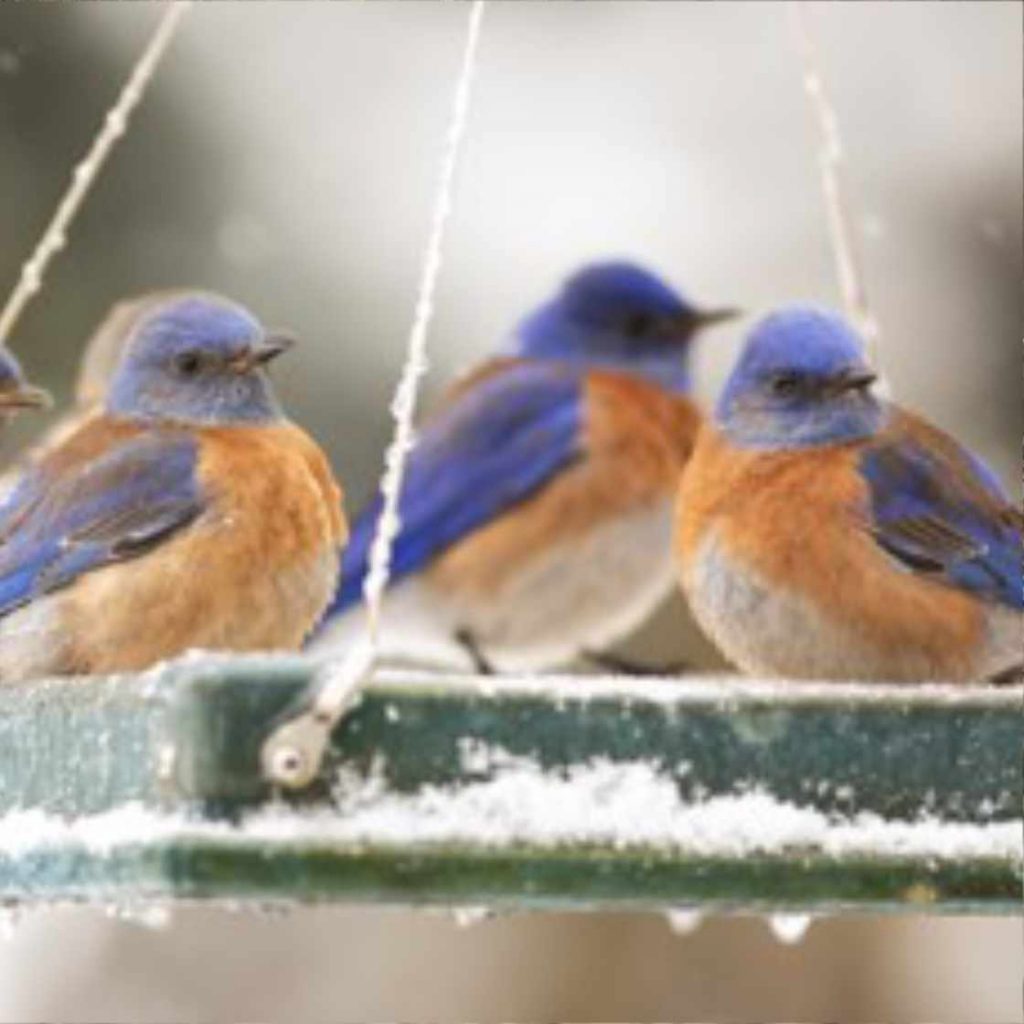
Bluebirds in the northern Willamette Valley do not migrate south for the winter. They gather in small flocks and forage on insects and dried berries. They will move to lower elevations if the winter is very cold. Sometimes they will roost overnight in nest boxes to shelter from adverse weather.